Key takeaways
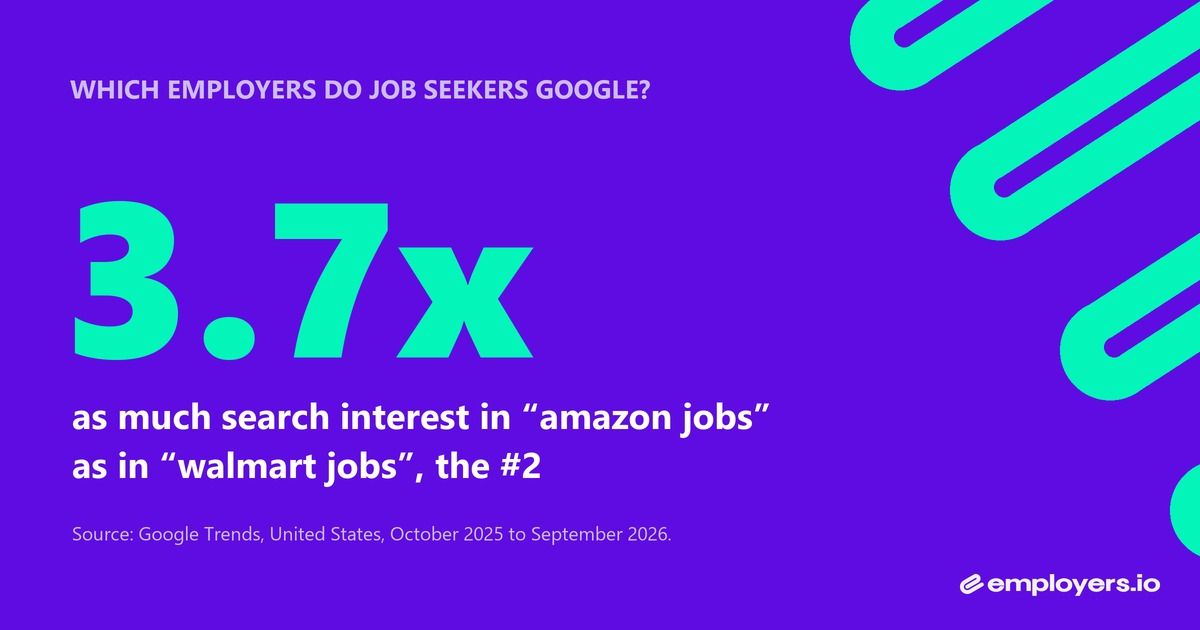
- Search interest in “amazon jobs” is about 3.7 times higher than in “walmart jobs”, the #2.
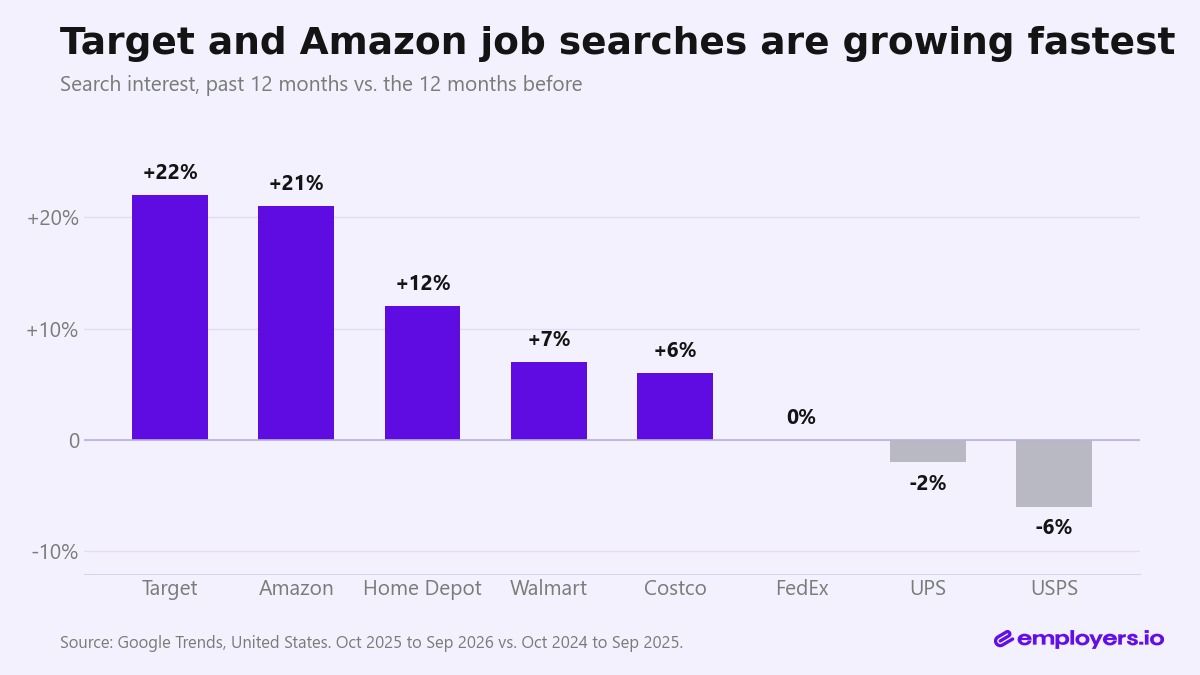
- Target (+22%) and Amazon (+21%) job searches grew the most over the past year.
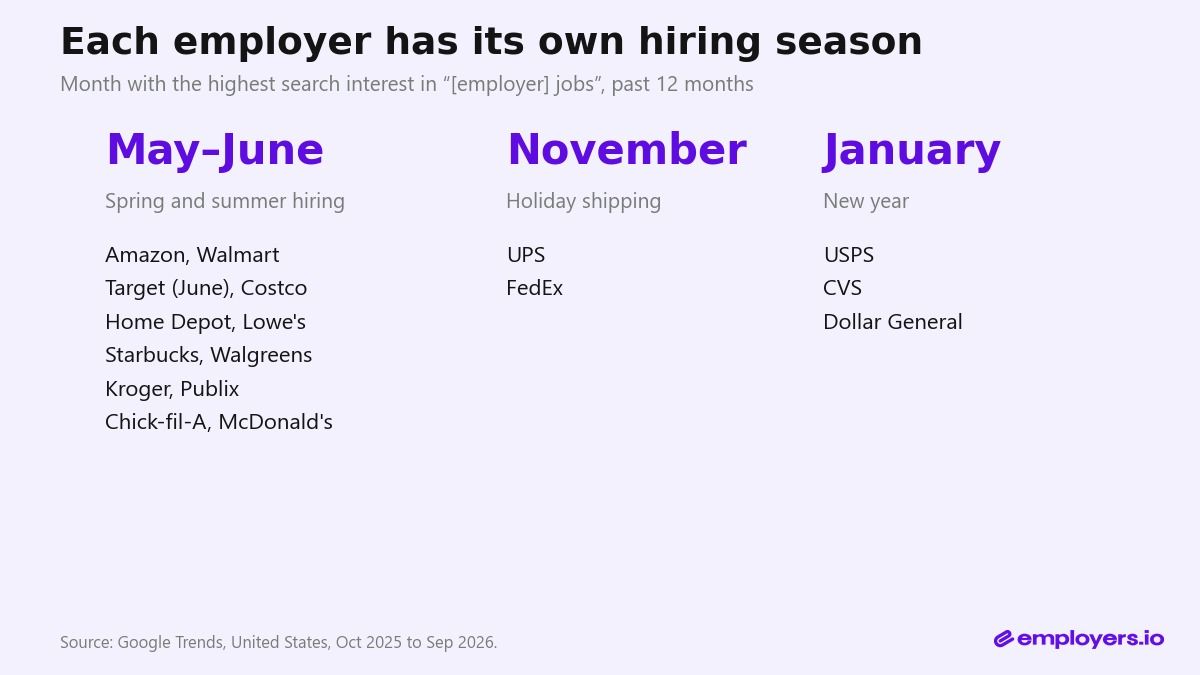
- Most employers peak in May. UPS and FedEx peak in November. USPS, CVS and Dollar General peak in January.
When job seekers look for work, many of them start with an employer's name. We compared Google searches for “[employer] jobs” for 17 of the biggest hourly employers in the U.S. over the past 12 months.
Amazon Is in a League of Its Own
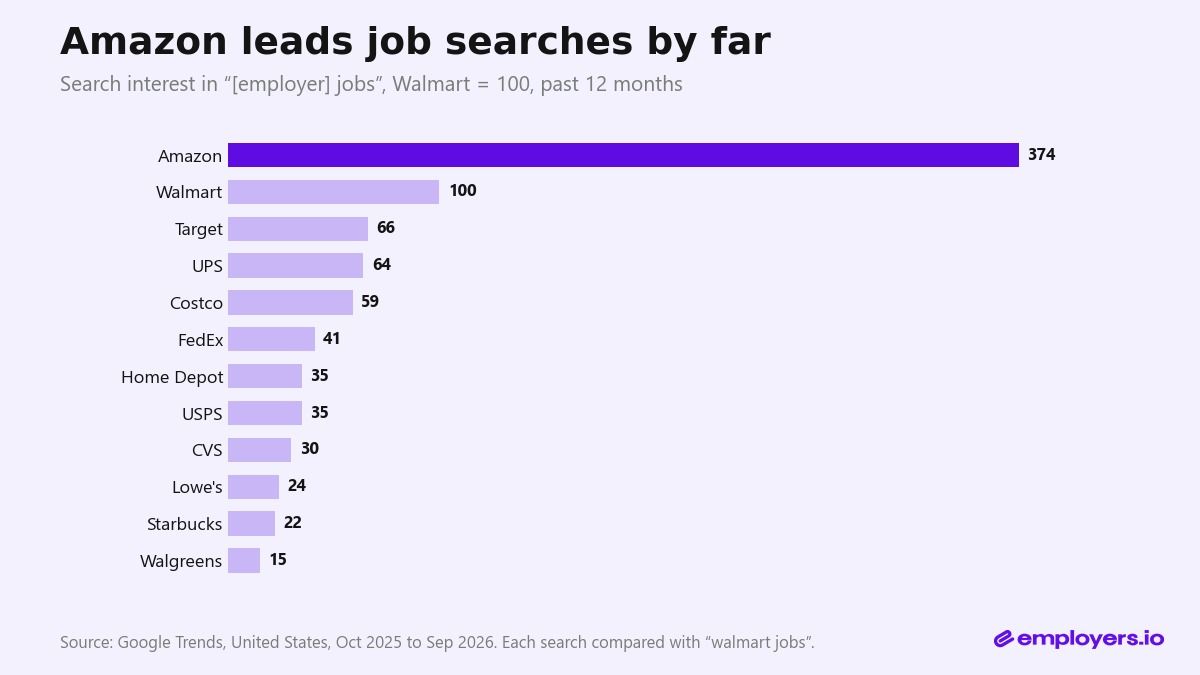
Search interest in “amazon jobs” is about 3.7 times higher than in “walmart jobs”, which ranks second. Target, UPS and Costco follow. Big retail and delivery brands dominate the list.
Search interest in “[employer] jobs”, past 12 months (Walmart = 100)
| Rank | Employer | Search interest | Peak month |
|---|---|---|---|
| 1 | Amazon | 374 | May |
| 2 | Walmart | 100 | May |
| 3 | Target | 66 | June |
| 4 | UPS | 64 | November |
| 5 | Costco | 59 | May |
| 6 | FedEx | 41 | November |
| 7 | Home Depot | 35 | May |
| 8 | USPS | 35 | January |
| 9 | CVS | 30 | January |
| 10 | Lowe's | 24 | May |
| 11 | Starbucks | 22 | May |
| 12 | Walgreens | 15 | May |
| 13 | Kroger | 13 | May |
| 14 | Publix | 13 | May |
| 15 | Chick-fil-A | 12 | May |
| 16 | McDonald's | 11 | May |
| 17 | Dollar General | 9 | January |
Average weekly search interest, October 2025 to September 2026. Each search was compared with “walmart jobs” in Google Trends, so all employers share one scale. Source: Google Trends, US.
Who's Growing
Compared with the year before, job searches grew most for Target and Amazon. Home Depot and Walmart also grew. UPS, FedEx and USPS were flat or slightly down.
| Employer | Change vs. the year before |
|---|---|
| Target | +22% |
| Amazon | +21% |
| Home Depot | +12% |
| Walmart | +7% |
| Costco | +6% |
| FedEx | 0% |
| UPS | -2% |
| USPS | -6% |
October 2025 to September 2026 vs. October 2024 to September 2025. Smaller searches are left out because their year-over-year changes are less reliable. Source: Google Trends, US.
Every Employer Has a Season
Most employer job searches peak in May, when spring and summer hiring starts. Delivery companies are different: UPS and FedEx peak in November, ahead of the holiday shipping rush. USPS, CVS and Dollar General peak in January.
What This Means for Agencies
- Plan by employer season. Retail searches peak in May, so start spring campaigns in April. Delivery peaks in November.
- If you recruit near an Amazon site, you're competing with the most-searched employer. Lead with pay, schedule and start date.
- If you hire for a well-known brand, put the employer name in the job title (when your client allows it). Job seekers search by name.
- Target and Home Depot searches are rising. Expect more competition for retail and store workers.
- For Google Ads, employer names are high-intent keywords, but never suggest you are the employer in the ad text.
About This Data
- Source: Google Trends, United States, weekly data. Pulled on October 13, 2026.
- What the numbers mean: Google Trends shows search interest, not the number of searches. Here, each employer is compared with “walmart jobs” (Walmart = 100).
- Searches used: “[employer] jobs”, for example “amazon jobs”, “mcdonalds jobs”, “chick fil a jobs”. Other spellings and searches like “[employer] careers” are not included.
- Ranking period: October 2025 to September 2026.
- Growth: the same period vs. October 2024 to September 2025, shown only for larger searches.
- Peak month: the month with the highest average search interest in the past 12 months.
Sources: Google Trends: Walmart, Amazon, Target, UPS and FedEx jobs, US, 5 years.