Uber Eats delivery earnings continue to rise due to higher order volume, increased tips, and strong demand in big cities. This guide breaks down the real hourly, daily, and weekly earnings, plus pay by city, state, vehicle type, and after expenses.
Summary: What You’ll Learn
- Most drivers earn: $17–$27/hr
- Big cities earn: $25–$35/hr
- Daily earnings: 120–$220/day
- Weekly earnings: $600–$1,200/week
- Bike delivery earns more per hour in dense cities
- Net income after expenses: typically $14–$22/hr
- Best cities: NYC, SF, Seattle, LA, Chicago, Miami
Related pages: Hiring Process | Salaries | Jobs
Hourly Earnings on Uber Eats (2026)
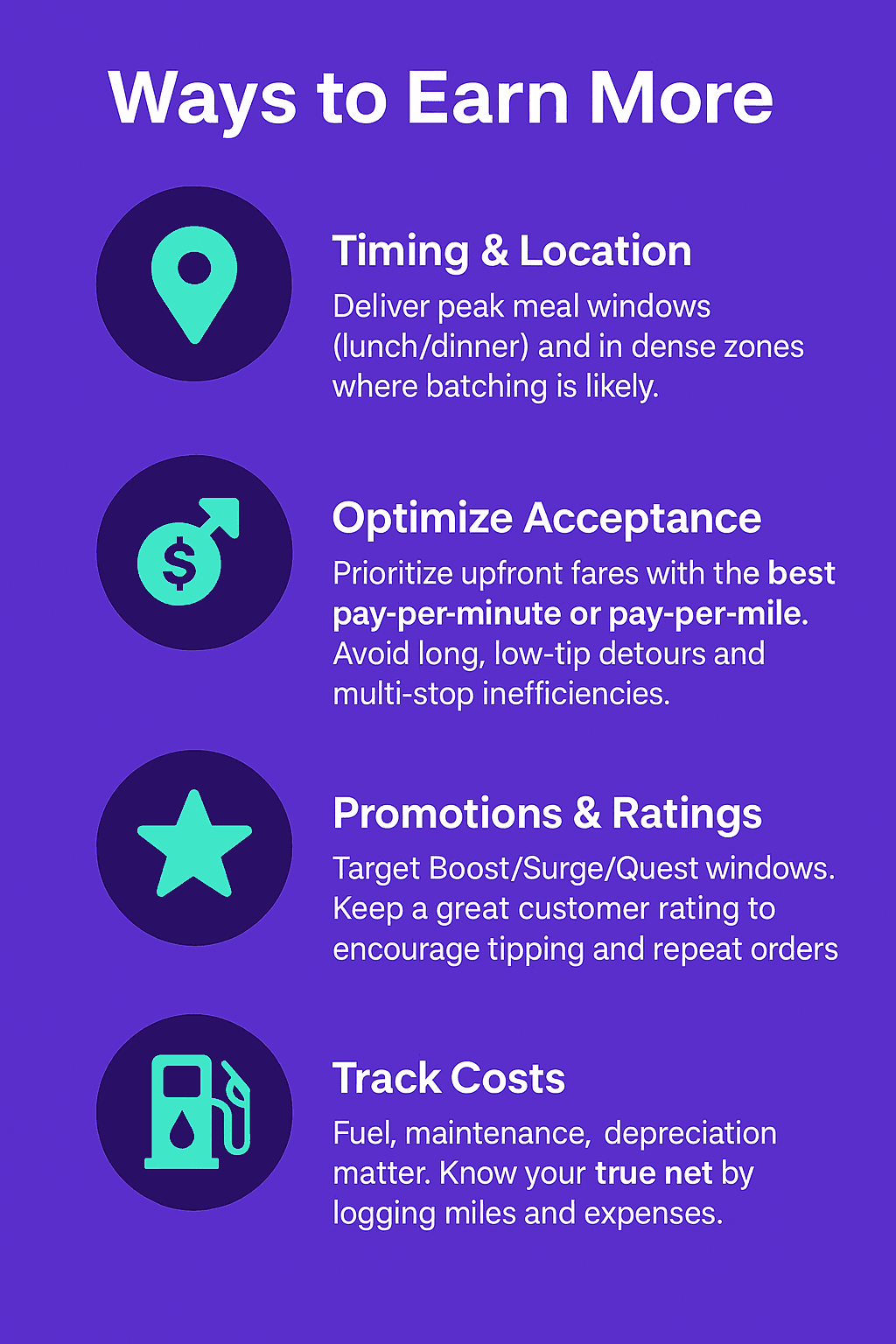
Most drivers report $17–$27/hr nationally, with big cities reaching $30–$35/hr during peak times.
| Category | Hourly Pay |
|---|---|
|
National average
|
$17–$27/hr |
|
Big cities
|
$25–$35/hr |
|
Suburbs
|
$15–$22/hr |
|
Peak hours
|
$28–$38/hr |
|
Bike/e-bike (dense cities)
|
$18–$30/hr |
How Much Can You Make Per DAY?
Uber Eats drivers can expect:
- Low-demand areas: $80–$140/day
- Most markets: $120–$200/day
- Big cities & peak hours: $180–$250/day
- Extreme multi-app pros: $250–$300/day
How Much Can You Make Per WEEK?
| Hours/Week | Weekly Earnings |
|---|---|
| 10–15 hrs (part-time) | $180–$400/week |
| 20–25 hrs | $350–$650/week |
| 30–35 hrs | $600–$900/week |
| 40–50 hrs | $900–$1,300/week |
| Peak strategy / full-time pros | $1,200–$1,500+/week |
Uber Eats Driver Earnings by City
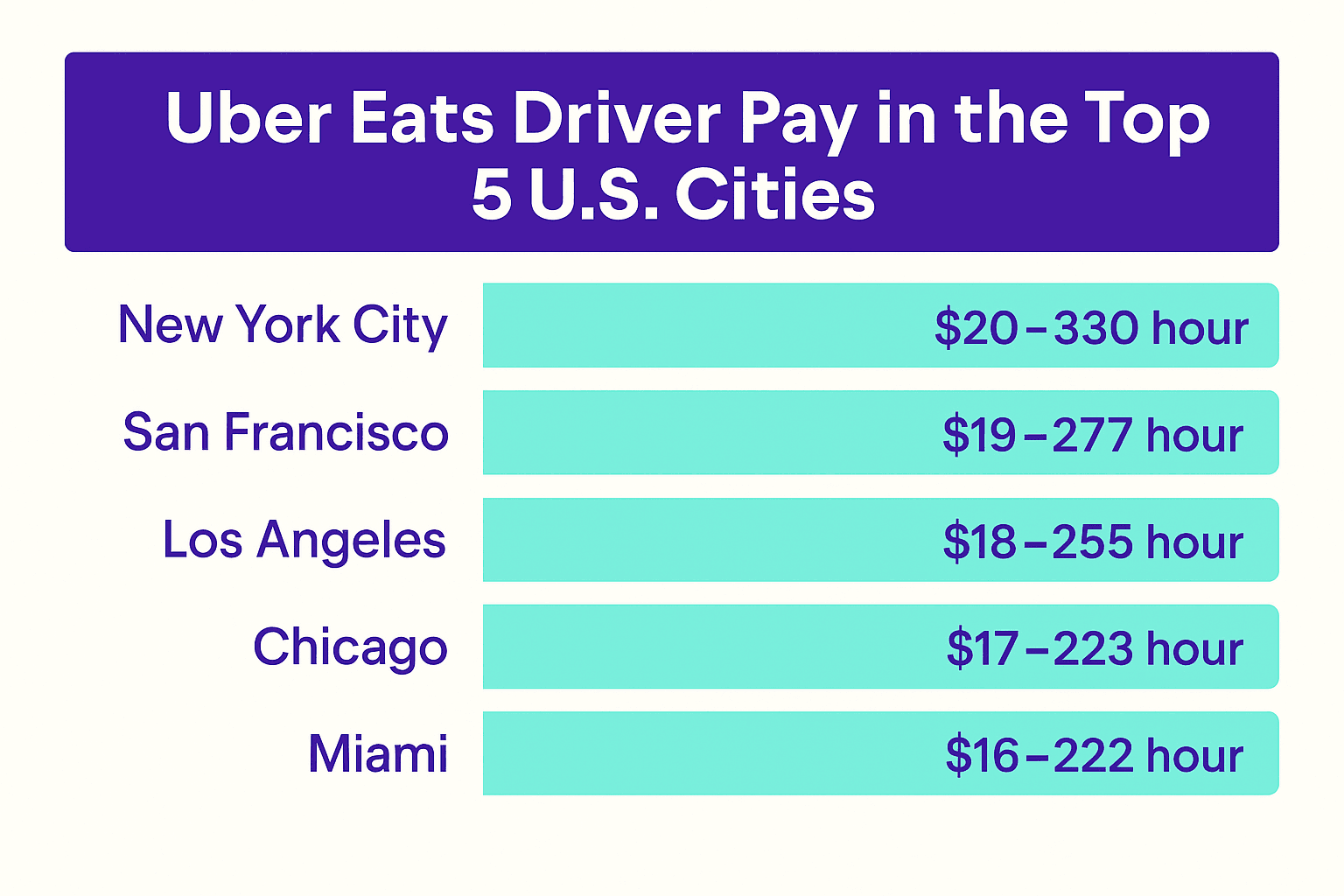
Best-paying Uber Eats cities in 2026:
- New York City – $28–$35/hr
- San Francisco – $27–$34/hr
- Seattle – $25–$33/hr
- Los Angeles – $22–$30/hr
- Chicago – $20–$28/hr
| City | Uber Eats Driver Pay |
|---|---|
| New York City | $28–$35/hr |
| Miami | $20–$27/hr |
| San Diego | $20–$28/hr |
| Austin | $18–$26/hr |
| Tampa | $17–$25/hr |
| Chicago | $20–$28/hr |
| Dallas | $18–$25/hr |
| Houston | $18–$26/hr |
| Phoenix | $17–$24/hr |
| Orlando | $17–$25/hr |
| Denver | $18–$26/hr |
| San Francisco | $27–$34/hr |
| Seattle | $25–$33/hr |
| Los Angeles | $22–$30/hr |
Net Earnings After Expenses
Major expenses include:
- Gas
- Maintenance
- Tires
- Insurance
- Depreciation
- Phone data
- Parking fees (some cities)
Typical net income:
$14–$22/hr after expenses (bike/e-bike riders keep more because expenses are nearly zero)(bike/e-bike riders keep more because expenses are nearly zero)
Bike vs Car Earnings (2026)
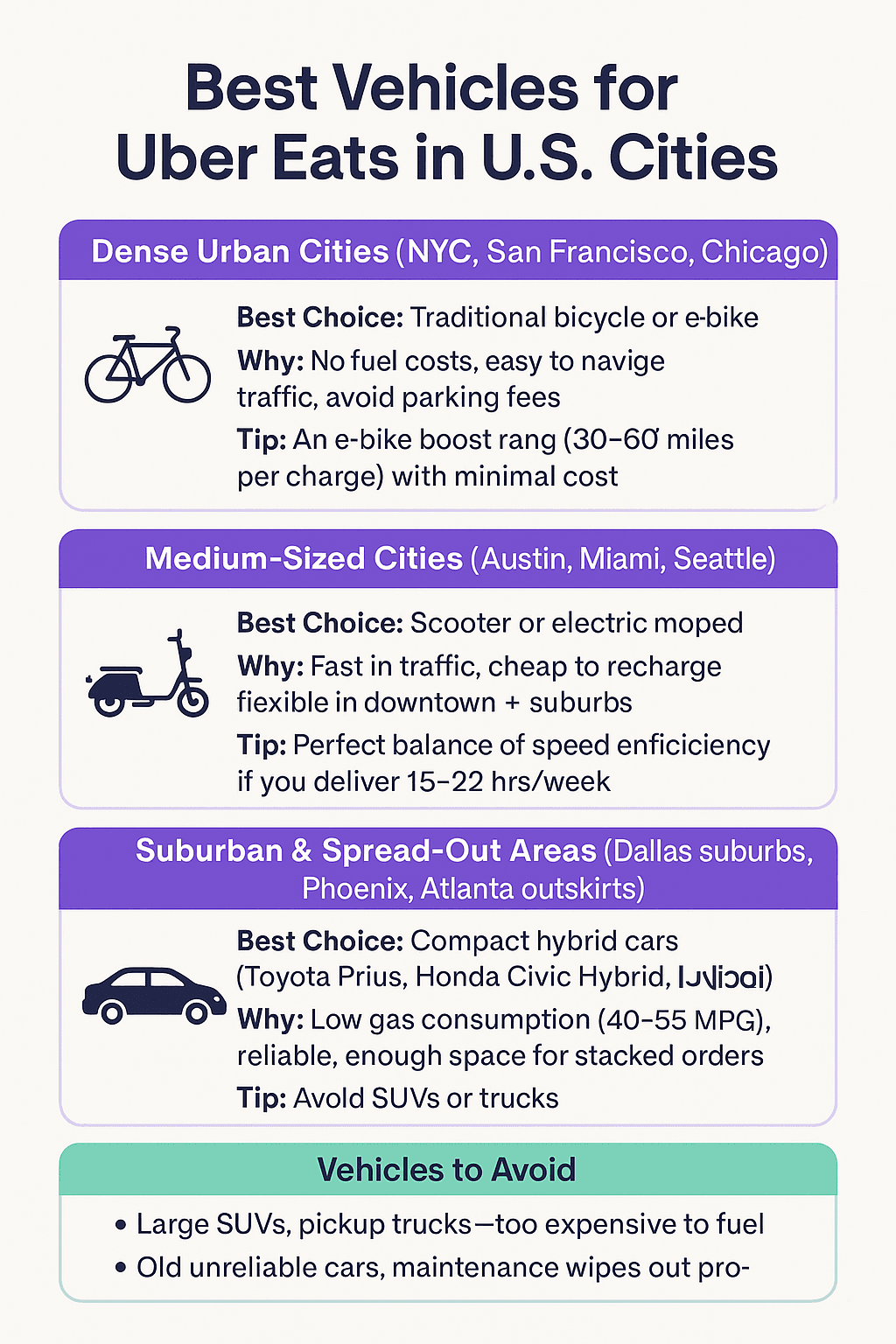
Your vehicle has a huge impact on how much you earn with Uber Eats in 2026. Here’s how each option performs based on national driver data:
E-Bike: $20–$32/hr E-bikes are now one of the most profitable ways to deliver. They allow riders to complete more orders per hour and make “stacked orders” easier. Great for couriers in big cities who want speed without the cost of a car.
Bike: $18–$30/hr Bikes perform best in dense downtown areas where parking is impossible and traffic is slow. Cities like New York City, San Francisco, Chicago, and Seattle consistently show the highest bike earnings. Zero fuel cost + direct routes = strong hourly pay.
Scooter: $17–$28/hr Scooters are a solid middle option. They require minimal maintenance, use very little fuel, and move faster than bikes in spread-out cities. They’re popular in warmer climates and medium-density areas.
Car: $17–$27/hr Cars offer the most flexibility, great for suburbs, long-distance deliveries, and late-night orders. However, expenses like fuel, insurance, and wear-and-tear reduce net profit. Best in cities where parking is not a constant problem.
Conclusion
In 2026, Uber Eats drivers in the U.S. typically earn about $20 per hour, with most falling in the $15–$27/hr range. Top drivers in busy cities like New York and San Francisco can reach $30–$40/hr during peak hours, while suburban and smaller markets often pay less.
Your actual income depends on four main factors:
- The city you deliver in
- The timing of your shifts (meal rushes pay best)
- Your vehicle choice (bike or e-bike in cities, hybrids in suburbs)
- How well you use promotions and tips to boost pay
Uber Eats can work as either a flexible side hustle or, in high-demand areas, a full-time income stream. To maximize success, focus on lowering costs, working peak windows, and building a reputation that earns consistent tips.